

THE HIDDEN COST OF EGGS
WHAT ARE FOOD COMPANIES
REALLY PAYING?
A data-driven analysis of the hidden operational, financial, and risk-related costs of using eggs in food manufacturing—and why more companies are rethinking egg dependency.
EXECUTIVE SUMMARY
Eggs have long been treated as a low-cost, reliable staple in food manufacturing. Today, that assumption no longer holds.
Across industrial, foodservice, and retail channels, eggs have become one of the most volatile and risk-heavy inputs in the supply chain. Disease outbreaks, regulatory shifts, and tightening supply have driven extreme price swings, while food safety, allergen handling, and operational complexity continue to add costs that rarely appear on an ingredient invoice.
This paper explores the hidden operational, financial, and risk-related costs associated with using eggs including volatility, sanitation downtime, allergen controls, food safety exposure, and waste. It also examines why a growing number of food companies are reassessing their dependency on eggs altogether and exploring alternatives designed to reduce complexity and restore predictability.
KEY TAKEAWAY
The true cost of eggs is not what appears on a supplier invoice, it is what companies pay in volatility, downtime, compliance burden, waste, and risk.
The illusion of a “Low-Cost” Ingredient
Eggs are often viewed as a commodity input — familiar, functional, and inexpensive. As a result, most companies evaluate eggs using traditional cost models that focus on price per pound. But this narrow view masks the full economic impact of using eggs in production.
What’s missing from standard cost calculations are the indirect costs that accumulate across procurement, operations, and risk management; costs that don’t appear on an invoice but directly impact margins, throughput, and scalability.
To understand the real impact of eggs, companies must consider the Total Cost of Ownership (TCO), which includes:
Procurement Volatility: Price swings, supply disruptions, and emergency sourcing
Labor and Time: Allergen handling, sanitation, testing, and documentation
Sanitation and Changeovers: Deep cleaning, validation, and production downtime
Risk Exposure: Breakage, spoilage, overstocking, and yield loss
Waste and Shrink: Food safety incidents, recalls, insurance & reputational damage
KEY TAKEAWAY
When these factors are taken into account, eggs are no longer a simple or low-cost ingredient—they are a complex, risk-laden input whose true cost is often underestimated.
The sections that follow break down where those hidden costs originate, and why more companies are exploring how they can reduce their dependency on eggs.
Hidden Cost #1:
Egg Price Volatility & Supply Disruptions
KEY DRIVERS OF VOLATILITY
Avian influenza outbreaks have decimated flocks, leading to widespread supply shortages and higher prices as producers cull infected birds and take months to rebuild laying capacity. (1)
As of January 16, 2026, ~186 million chickens, turkeys and other birds have died or been culled since the U.S. H5N1 strain of highly pathogenic avian influenza (HPAI) outbreak in poultry began on February 8th, 2022. (2)
In early 2025, the US egg industry culled roughly 9.5% of the entire population. (3)
According to the American Egg Board, rebuilding and repopulating can take up to a year or more for egg farmers. (4)
Regulatory and welfare mandates such as cage-free requirements can increase production costs and tighten short-term supply. (5)
Seasonal demand spikes such as holiday baking exacerbate shortages when supply is already constrained. (6)
BUSINESS IMPACTS
Unpredictable COGS: Frequent price swings make ingredient cost forecasting difficult and squeeze margins.
Contract renegotiations: Long-term supply agreements are stressed as market prices swing dramatically. Additionally, some suppliers are signing shorter contracts or ones that allow for more price adjustments built in.
Emergency sourcing at premiums: When primary suppliers can’t deliver, companies may resort to spot market purchases with significantly higher prices.
Production planning disruption: Volatility complicates budgeting, scheduling, and pricing models
When egg prices double (7), margins disappear overnight.
Recent market conditions have seen prices reach historic highs due largely to supply impacts from disease and constrained output, underscoring how quickly egg costs can disrupt business economics.
Hidden Cost #2:
Food Safety Risk & Recall Exposure
Eggs are one of the highest-risk ingredients for foodborne illness, particularly salmonella, and this risk creates real costs for manufacturers beyond the price on the invoice.
Why Eggs Pose Risk
Eggs have been linked to recurring, large salmonella outbreaks and recalls over many years, including but not limited to almost 8 million eggs being recalled over multiple incidents in 2025 (8,9), over 200 million eggs recalled in 2018 (10), the recall of over 100 tons of powdered eggs in 2014 (11), and 500 million eggs recalled in 2010. (12)
Shell eggs, liquid eggs and powdered eggs all carry contamination risk; with pasteurization reducing but not eliminating liability. (13)
Hidden Costs Manufacturers Face
HACCP complexity: Detailed hazard analysis and preventive controls are required to mitigate salmonella risk, adding planning, validation, and monitoring work.
Supplier audits & testing: Frequent microbiological testing and audits of egg suppliers add quality assurance labor and expenses.
Insurance premiums: Higher liability and recall exposure lead to elevated insurance costs for companies handling eggs.
Recall preparedness & reputation: Recalls demand emergency response, product retrieval, replacements, and can damage customer trust—all while eating into margin.
Salmonella-linked egg recalls in the U.S. are not isolated events.
Multiple recalls can occur within a single year, reflecting a persistent public health risk with operational and reputational costs that extend far beyond direct product loss.
Hidden Cost #3:
Allergen Handling & Operational Complexity
Eggs aren’t just an ingredient; they’re a top 9 allergen, and that puts heavy operational demands on food manufacturers. Managing egg allergen risk adds time, labor, and complexity at every stage of production. (14)
Why Allergen Handling Matters
1. Eggs are one of the most common food allergens, requiring strict separation and monitoring to prevent cross-contact. (14)
2. Even trace exposure can trigger recalls or trigger consumer harm, so processors must treat egg management as a high-risk control point.
Hidden Operational Costs
Dedicated allergen controls: Separate SOPs, tooling, and zones to prevent cross-contamination. (15)
Cleaning & sanitation: Egg use requires deeper and more frequent cleaning and validation, increasing downtime and driving higher labor, water, chemical, and testing costs, even in egg-only production.
Downtime = idle lines: Longer sanitation translates to lost production time and higher opportunity costs.
Extra labor & QA oversight: More staff time for sanitation, documentation, and supervision than for non-allergen runs.
KEY TAKEAWAY
The impact is felt in reduced production flexibility, increased labor costs, and more complicated planning cycles that can ripple across the entire operation. (15)
Hidden Cost #4:
SHRINK, WASTE, & SHELF-LIFE LOSS
Why Eggs Lose Value in the Supply Chain
Fragility and breakage (shell eggs): Shell eggs are inherently fragile, leading to unavoidable breakage and waste during transport and handling despite protective packaging.16
Short shelf life and timing risk (liquid eggs): Pasteurized liquid eggs have limited refrigerated shelf lives unless extended through costly processing, leaving little room for demand shifts or supply disruption.
Planning strain during supply shocks: Outbreaks and other disruptions amplify these constraints, making it difficult to align short shelf lives with volatile supply and demand.
Expiration-driven waste: Shelf-life limits force the disposal of expired inventory rather than risk quality or safety issues.
Powdered egg caveat:While powdered eggs last longer under controlled conditions, they still carry egg-specific volatility, allergen controls, and food safety exposure, unlike powdered egg alternatives.
Hidden Costs Manufacturers Face
1. Disposal fees: Spoiled or expired egg products must be disposed of properly, often at a fee and with regulatory documentation.
2. Overstocking to avoid stockouts: To avoid running out of eggs, buyers often overbuy which increases the risk of spoilage and ties up working capital.
3. Yield variability: Because of breakage, quality variation, and spoilage, the actual usable yield can be lower than the purchased volume, squeezing the margin unpredictably. (17)
The Compounding Effect:
When Hidden Costs Stack Up
As volatility, risk, and complexity compound, decision-makers are looking for ingredients that offer:
Cost predictability in an unstable commodity market
Simpler operations with fewer controls and changeovers
Reduced risk exposure across food safety, allergens, and recalls
Scalability without adding disproportionate overhead
Plant-based egg replacers are increasingly seen as:
Functional ingredients, not a compromise on performance
Risk-management tools that reduce exposure to volatility, allergens, and safety events
Opportunities to bring greater control and predictability to complex production environments
Rethinking Egg Dependency: Why Companies Are Exploring Alternatives
In this context, egg alternatives are no longer viewed as niche or experimental. Instead, they are being evaluated as flexible, functional inputs that solve real business problems.
Companies don’t need to fully eliminate eggs to see value; each incremental shift away from eggs can reduce exposure to price volatility, food safety risk, and operational complexity, allowing teams to dial in the right balance for their products and systems.
How Egg Alternatives Reduce Hidden Costs
When evaluated against the hidden costs of eggs, the best egg alternatives can address many of these pain points. The extent to which costs, risk, and complexity are reduced depends on how much egg functionality is actually replaced and where in the system that replacement occurs.
Reduced volatility & cost uncertainty
Pricing is typically more stable and contract-friendly
Less exposure to disease-driven supply shocks and market swings
Longer shelf life and less waste
Reduced spoilage, breakage, and expiration losses
Lower shrink and more predictable yields
No egg allergen handling
Eliminates top 9 allergen controls tied specifically to eggs
Reduces cross-contact risk, documentation, and QA/QC burden
Lower food safety risk
Removes one of the most common vectors for salmonella
Decreases recall exposure and associated reputational damage
Simplified sanitation and operations
Fewer deep cleans and shorter changeovers
Improved line flexibility and higher throughput

Conclusion:
The Future of Smarter Egg Use
As food companies scale, simplicity and predictability become competitive advantages. Ingredients that introduce volatility, risk, and operational complexity don’t just strain margins, they slow growth.
Eggs have long been treated as a default input, but their hidden costs are becoming harder to justify. Price swings, food safety exposure, allergen controls, sanitation downtime, and waste add friction to systems built for speed and efficiency.
As a result, companies are no longer viewing egg use as an all-or-nothing decision. Reducing reliance on eggs—whether through partial replacement or full removal in certain applications—can materially lower risk and operational burden without disrupting production.
At the same time, many egg alternatives have matured into practical, scalable tools. They enable companies to limit exposure, stabilize costs, and simplify processes, while maintaining functionality across a wide range of products.
Take Back Control
of Your
Supply Chain
For too long, eggs have meant volatility, complexity, and hidden costs. ProBake Binder changes that.
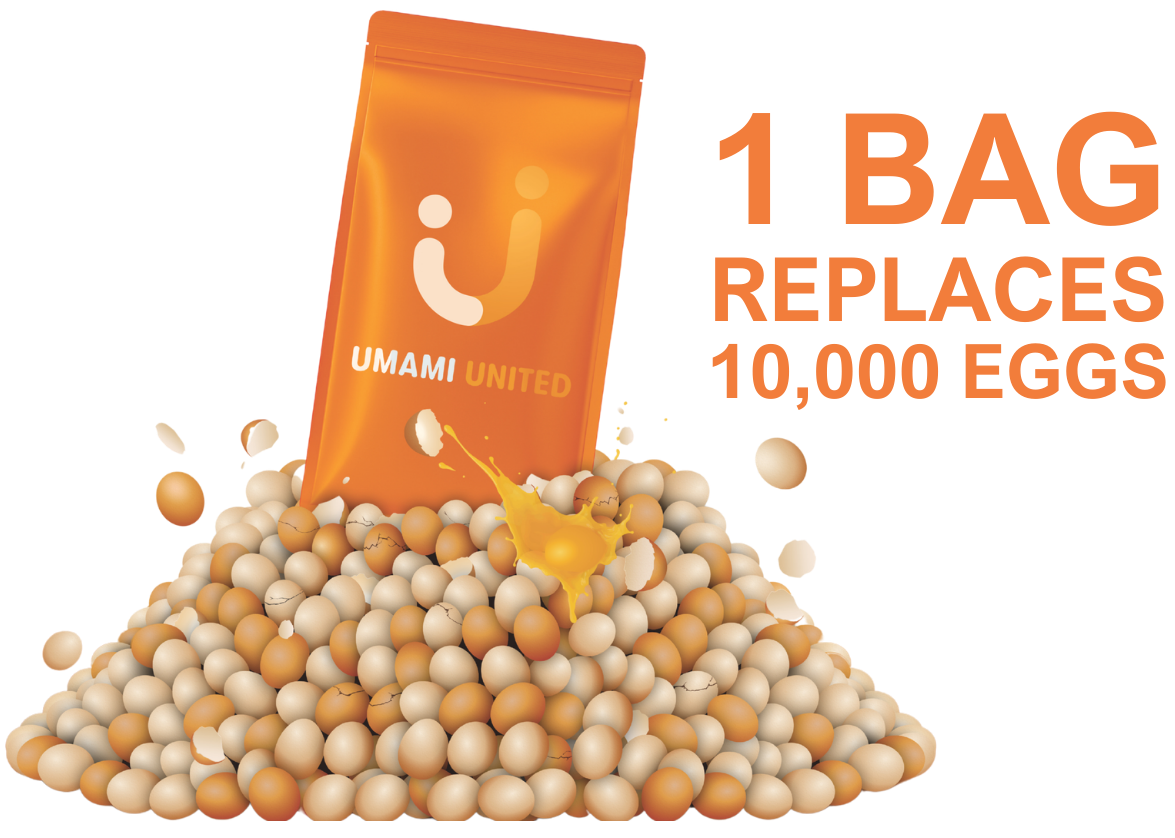
1 gram functionally replaces 1 whole egg
CLEAN LABEL
SHELF STABLE
TOP 14 ALLERGEN FREE
KOSHER & NON-GMO
PLANT BASED
STABLE PRICING & SUPPLY CHAIN
Ready to see what stability looks like?
REFERENCES
(1) Polansek, T., & Douglas, L. (2025, February 21). Explainer: How bird flu has sent US egg prices skyrocketing. Reuters. https://www.reuters.com/world/us/how-bird-flu-has-sent-us-eggs-prices-skyrocketing-2025-02-21/
(2) HPAI Confirmations in Commercial and Backyard Flocks. (2024, June 20). www.aphis.usda.gov. https://www.aphis.usda.gov/livestock-poultry-disease/avian/avian-influenza/hpai-detections/commercial-backyard-flocks
(3) Global Ag Media. (2025). Bird flu wipes out over 30 million US laying hens in 2025 - USDA AMS. Thepoultrysite.com. https://www.thepoultrysite.com/news/2025/04/bird-flu-wipes-out-over-30-million-us-laying-hens-in-2025-usda-ams
(4) Restoring America’s Egg Farms. (2023). The American Egg Board. https://acrobat.adobe.com/id/urn:aaid:sc:VA6C2:b59fa298-89ba-47bf-96ae-ac71bc6f78d9?viewer%21megaVerb=group-discover
(5) Caputo, V., Lusk, J., Tonsor, G., & Staples, M. (2023). The Transition to Cafe-Free Eggs. https://unitedegg.com/wp-content/uploads/2023/02/Full-Report-Caputo-et-al.-2023-February-20.pdf
(6) Funk, J., & Durbin, D.-A. (2025, April 10). Egg prices increase to record high despite Trump’s predictions and bird flu outbreak slowing. AP News. https://apnews.com/article/egg-prices-bird-flu-cpi-b0ded420e9f7c0a707277c9c63396a76
(7) Lakhani, N. (2025, March 4). $5 a dozen: major egg companies may be using avian flu to hike US prices, new report finds. The Guardian; The Guardian. https://www.theguardian.com/environment/2025/mar/04/egg-prices-bird-flu-corporate-profits
(8) August Egg Company Recalls Shell Eggs Because of Possible Health Risk. (2025). U.S. Food and Drug Administration. https://www.fda.gov/safety/recalls-market-withdrawals-safety-alerts/august-egg-company-recalls-shell-eggs-because-possible-health-risk
(9) FDA Announces Highest Risk Level For Recall of 6 Million Eggs. (2025). Health. https://www.health.com/fda-highest-risk-level-egg-recall-11831158?
(10) Salmonella Outbreak Sickens Dozens After Massive Egg Recall. (2018, May 11). Cbsnews.com. https://www.cbsnews.com/sacramento/news/salmonella-outbreak-egg-recall/
(11) 100 Tons of Dried Eggs Recalled Over Salmonella Worries. (2014, February 15). NBC News. https://www.nbcnews.com/health/health-news/100-tons-dried-eggs-recalled-over-salmonella-worries-n31241
(12) Cracks in the System: Egg Recall Reveals FDA Flaws. (2010, August 20). ABC News. https://abcnews.go.com/Health/Wellness/salmonella-outbreak-egg-recall-shows-fda-flaws/story?id=11445664
(13) CDC. (2024, June 27). Egg Preparation. Restaurant Food Safety. https://www.cdc.gov/restaurant-food-safety/php/practices/egg-preparation.html
(14) Food Allergies: The “Big 9” | Food Safety and Inspection Service. (2024). Usda.gov. https://www.fsis.usda.gov/food-safety/safe-food-handling-and-preparation/food-safety-basics/food-allergies-big-9
(15) Gupta, R. S., Taylor, S. L., Baumert, J. L., Kao, L. M., Schuster, E., & Smith, B. M. (2017). Economic Factors Impacting Food Allergen Management: Perspectives from the Food Industry. Journal of Food Protection, 80(10), 1719–1725. https://doi.org/10.4315/0362-028x.jfp-17-060
(16) Shell Egg Surveillance | Agricultural Marketing Service. (2026). Usda.gov. https://www.ams.usda.gov/rules-regulations/eggs
(17) Chapter 3 - Egg packaging, transport and storage. (2026). Fao.org. https://www.fao.org/4/y4628e/y4628e05